Wednesday, June 15, 2022

My knee replacements

 On May 17th I had my right knee replaced. Four weeks later, on June 14th, I had my left knee replaced. I wanted to get it all over with.

I’m writing this on June 15th, lying on the couch and typing on my iPad with my left index finger. We’ll see how it goes. Normally I write these posts using Word on my desktop computer, then copy and paste them into the Blogger app. But my desktop computer is upstairs.

I’m doing well. The pain isn't too bad and I can bend it and straighten my leg pretty well. So far, I haven’t needed to take many pain meds. A physical therapist came here today. She said she was impressed with my progress.

My surgeon is Alexander Sah. Here’s his picture. When he calls, maybe I’ll ask him how old he is. I do know that he’s performed about 1500 of these surgeries and that his resume is 35 pages long. I chose him because of friends’ rave reviews.
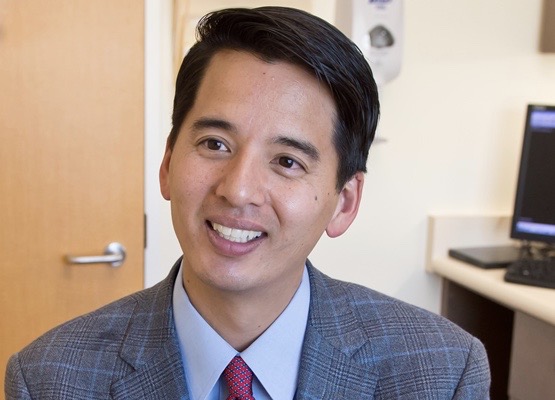
Sah and his partner established The Center for Joint Restoration and Research at Washington Hospital in Fremont, about an hour’s drive north from our house. An entire wing of the hospital is devoted to this outfit. I found it interesting that not one of the many people dealing with me was white. They were a mix of Chinese, African, Indian, and I don’t know what else. All the patients I saw were white. I looked up the demographics of Fremont: 61 percent Asian, 22 percent white.

I hope all this lying around on the couch day after day doesn’t atrophy all my muscles. I’m looking forward to getting back to golf and gardening (house cleaning not so much).

For an introduction to this blog, see I Just Say No; for a list of blog topics, click the Topics tab.


Sunday, June 12, 2022

Our quirky bodies

 Even if I drink a lot, I never pee very much. I can go ten hours without emptying my bladder. I think my tissues just hang on to water, as they seem to be doing right now. I had my knee replaced on May 17th and, as I write this ten days later, it’s still quite swollen. The swelling isn’t going down as fast as I’d like, but maybe that’s the case with everyone whose had this surgery.  

At the hospital, after surgery, they get you up to go to the bathroom. They place a little plastic pee-catcher under the toilet seat. You pee into that so the nurses can measure your output. Even though I’d been given fluids intravenously, I peed only a few tablespoonsful. Despite my protestations, the nurses assumed I was holding urine in my bladder. They wouldn’t let me go home until they were sure I’d emptied it—this, I guess, to ensure everything was working properly. They insisted on doing an ultrasound on my bladder to see what was in it, a procedure that delayed my discharge. The ultrasound showed that my bladder was empty. Told ya!

I’ve always gotten blisters exceptionally easily. A few years ago, I walked about 100 yards in Crocs shoes without putting socks on first, figuring I could make it from our room at Asilomar to the dining room. When I got back, I had huge blisters on both feet. My theory is that my blister-making capability is another example of my tissues hanging on to fluid. By the way, my blister problem was largely solved with the introduction of socks like SmartWool that cling smoothly to your feet with no wrinkles.

I don’t know if my theory holds any water, but I’m sticking with it.

For an introduction to this blog, see I Just Say No; for a list of blog topics, click the Topics tab.

Sunday, June 5, 2022

Price gouging with combination drugs

 Doctors often prescribe drugs that are a combination of two drugs. This makes it convenient for the patient. But the cost of the combo drug is ridiculously higher than the cost of the two drugs sold separately. Here are examples: Zegerid, a drug for acid reflux, costs $86.29 per pill, while the generic components, omeprazole, which you can buy off the shelf, and sodium bicarbonate (baking soda) cost 47 cents. Vimovo, an arthritis drug, costs $2,482 for a 60-pill bottle. It is a combination of Aleve ($14.00) and Nexium ($24.00). Fosamax Plus D, has a list price of $39.05 per pill, while the generic components, Alendronate and vitamin D3 cost $1.25.

When prescribing such drugs, doctors often don’t know the high cost of such drugs. As one doctor notes, “As a physician, I often don’t know what the medications that I prescribe cost. And then when a patient goes to pick it up at the pharmacy, they only see what their copay is.” Another doctor, writing in The New England Journal of Medicine gets it. A family member asked him to pick up Onexton, an acne medicine, from the pharmacy. The pharmacy was going to charge him $800. Instead, he bought the ingredients separately for about $20. The same doctor helped an uninsured patient save money on blood pressure medicine. Instead of paying $90 for Hyzaar DS, he prescribed the drug’s components, bringing the price down to $6.00.  

While insured people usually dole out a small co-pay for such drugs, Medicare shells out $925 million more for these combination drugs than they would pay for their generic components (2016 figures). As one cost economist says of the drug companies, “Their business model essentially involves gouging insurers and health plans, which ultimately costs consumers.”

For an introduction to this blog, see I Just Say No; for a list of blog topics, click the Topics tab.

Sunday, May 29, 2022

Guns: the leading cause of injury-related deaths among U.S. children

 Note: I wrote this post a few weeks before the Uvalde school shooting. Little did I know....

For more than 60 years, motor vehicle crashes were the leading cause of injury-related death among young people. Beginning in 2017, however, gun-related injuries took their place to become the common cause of death from injury. Between 2000 and 2020, the number of gun-related deaths among children, adolescents, and young adults increased from 6998 to 10,186.

Substantial federal funding has been devoted to research on motor vehicle crashes as well as automobile safety. We have the National Highway Traffic Safety Administration, a federal agency whose mission is to save lives and prevent injuries caused by road-traffic crashes. This agency collects data on motor-vehicle related deaths, conducts research such as crash tests, implements vehicular safety improvements, and much more. Seat belts, airbags, automatic emergency braking, and rear-facing cameras are among the improvements that have made cars safer. What’s more, drivers must be licensed, and vehicles registered.

In contrast, guns are one of the few products for which safety isn’t regulated by a designated federal agency, and it’s taken 20 years to build a firearm-related database that includes data from all 50 states. To make matters worse, many states have made it easier for children and young adults, as well as adults with criminal records, to gain access to firearms, not to mention allowing people to carry a concealed weapon without a permit. And the firearms available to civilians have become more lethal, in part because manufacturers are increasingly selling weapons designed for military use.

Of course, you knew most of this. Still, I think it's worth mentioning.

Another note: I'm doing fine following my knee replacement surgery on May 17. Today, May 27, I climbed stairs for the first time so I could get to my desktop computer.

For an introduction to this blog, see I Just Say No; for a list of blog topics, click the Topics tab.